SoftWiz • Custom development • Automation • Off-the-shelf tools
When to build a custom system or automation, and when off-the-shelf is better
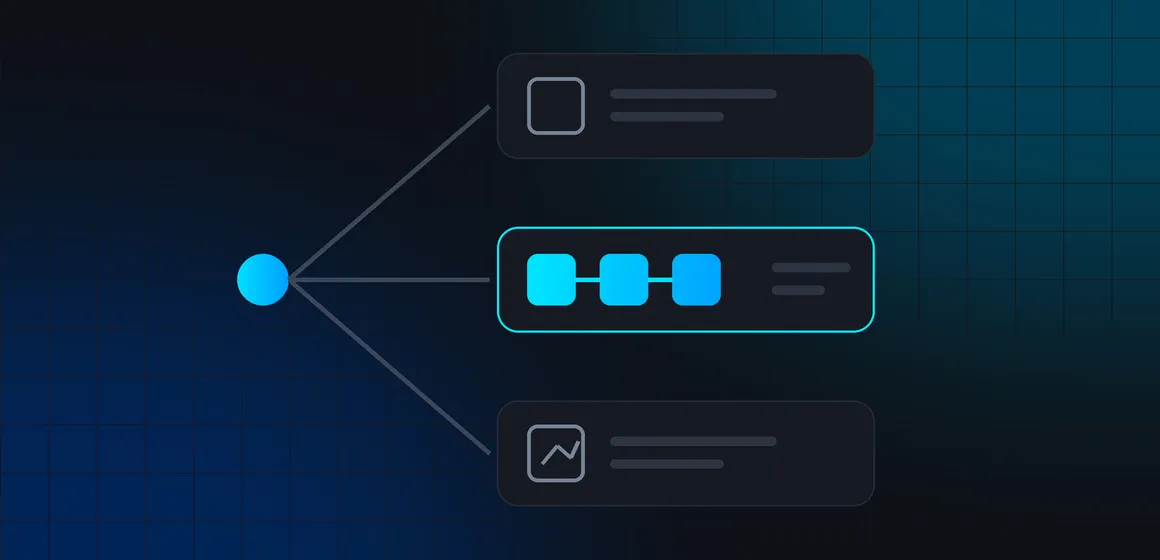
“Build or buy” is a question almost every business asks, and almost always asks the wrong way. It assumes there are two options. In practice there are three, and the middle one, which is easy to miss, is often the right one.
Three routes, not two
1. An off-the-shelf tool, as it comes. monday.com, an existing CRM, a telephony system. Configure it, train the team, get to work.
2. Off-the-shelf tools with automations and integrations. The same tools, joined into one process: a lead from your website becomes a record, a task is created for a rep, a WhatsApp message goes to the customer, and nobody types anything twice.
3. A custom system. A tool built for you, around your process.
Many businesses that come to us to build a system actually need the first or second route. That does not mean development is never justified. It means the cheaper routes are worth ruling out before reaching for the expensive one.
The same logic applies to AI agents
With an AI agent there are also three routes: a ready-made agent inside a system you already have, an agent built without code on that system, and an agent developed in code.
monday CRM, for example, now offers both pre-built agents, such as one that sources and scores leads or one that calls them, and a no-code agent builder (Agent Factory) that connects to your tools and data. As of September 2026 these agents are marked Early Access. Development in code is justified when the agent has to work across several systems, following logic no ready-made tool covers.
Five questions that decide it
1. Is your process genuinely unique, or just undefined?
This is a common mistake. A business feels that no tool fits, but when the process is broken down, the real problem is that nobody has defined it: who handles a lead, when, and what happens when it stalls. An undefined process will not be solved by a new system. It will move into it with you.
A genuinely unique process looks different: you have defined it, tried tools, and every one of them forces you to bend how you work around what the tool can do.
2. How many systems take part in one process?
One system: an off-the-shelf tool is almost always enough. Two or three: an automation that connects them. Many systems, with business logic that has to run between them and no ready-made answer on the market: this is where development starts to be justified.
3. What will licence costs look like in two years?
Off-the-shelf tools are usually priced per user, plus an add-on, plus a module. That looks cheap on day one and grows with the team. At some point a system of your own is simply cheaper, and it is worth working out where that point is for you before you reach it.
4. What happens when the process changes?
With an off-the-shelf tool, the vendor decides what is possible. With your own system, you decide, but you also own the maintenance. Neither answer is always better. What matters is knowing which price you would rather pay.
5. Are you subject to regulation or strict information-security requirements?
If the system will hold medical, financial or security-sensitive data, development needs a more conservative process, with documentation, review and security testing. That adds cost and time. It is not a reason to rule development out, but it is a reason to know it up front rather than halfway through the project.
What AI-assisted development changed
Until recently, custom development was the expensive option, and small and mid-sized businesses usually went without. That has changed.
AI development tools write code far faster than a person, especially in the parts that take most of the time: interfaces, API connections, forms and reports. That feeds straight into the price, and systems that would not have fitted a mid-sized business’s budget two years ago fit it today.
What has not changed: these tools do not understand your business, and they sometimes produce code that looks correct and contains a logic error or a security weakness. So scoping, testing and human review stay exactly as they were. The tools shortened the writing, not the responsibility.
For your decision, this means question 3 above, licence costs against development costs, looks different today from how it looked two years ago. It is worth running the numbers again.
The expensive mistake, in both directions
Building when an off-the-shelf tool fits. You pay to develop something that already exists, and end up with a system you have to maintain yourself.
Bending around a tool that does not fit. The team finds ways around the system, and the data drifts back into spreadsheets. A system nobody uses costs more than one that was never bought.
Where to start
With scoping, not with choosing a tool. Break the process down, see where it breaks, and only then check what covers it: an off-the-shelf tool, integrations, or custom development.
If the conclusion is that you do not need development, we will say so in the first conversation, even when it means we do not work together.
Frequently asked questions
When should a business build a custom automation rather than use an off-the-shelf tool?
When the process is genuinely unique rather than simply undefined, when several systems have to work as one continuous process with no ready-made answer, or when licence costs already exceed the cost of building. In every other case an off-the-shelf tool, on its own or with automations, is almost always faster and cheaper.
What is the difference between an automation and a custom system?
An automation connects tools you already have and runs actions between them on its own: a lead from a form becomes a record, a task is created, a message goes out. A custom system is a new tool built for you. Automation is faster and cheaper, and it fits when your existing tools are good and the problem is that they do not talk to each other.
Is AI-assisted development cheaper?
Yes, and significantly. AI tools write code far faster, especially in the parts that take most of a project’s time: interfaces, API connections, forms and reports. They do not replace scoping or human review, so the saving is in the writing, not in the responsibility.
When is a ready-made AI tool better than a custom AI system?
When the need is general and well defined, such as transcription, summarising or answering common questions, and an existing tool does it well. In between, there are now agents you build without code inside an existing system, as in monday CRM. Custom development is justified when the AI has to work across several systems, by rules of yours that no ready-made tool covers.
Sources
Information about third-party systems was checked against their official websites in September 2026 and may change:
- monday CRM: AI agents and the no-code agent builder